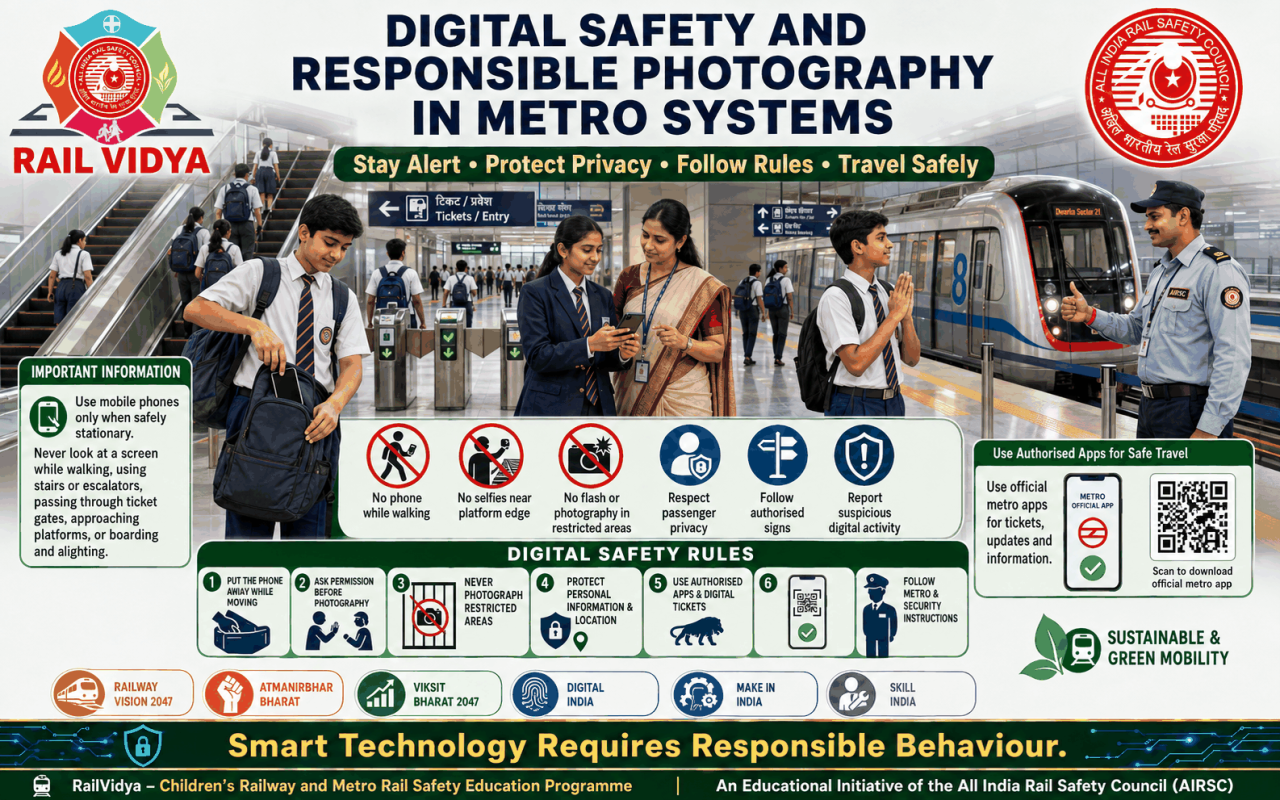
USE TECHNOLOGY WISELY • CAPTURE RESPONSIBLY Children must avoid using mobile phones while walking, boarding, alighting or using escalators in metro stations. Photography should never compromise safety, passenger privacy or operational rules. Personal information, digital tickets and travel details must be protected, and only official metro applications should be trusted. Technology should support a safe journey—never create distraction, intrusion or danger.
Digital Safety and Responsible Photography in Metro Systems
Digital technology has become an important part of modern metro travel. Mobile phones and authorised applications can help passengers plan routes, purchase tickets, receive service information and communicate during journeys. However, careless device use and inappropriate photography can create physical, personal, operational and security risks. Children must therefore learn to use technology without compromising safety or the rights of others.
Mobile devices should be put away whenever full attention is required. Children must not look at screens while walking through stations, using stairways or escalators, approaching platforms, passing through ticket gates, or boarding and alighting. A moment of digital distraction may cause a collision, fall or failure to notice a warning.
Headphones and earphones should be used cautiously and at a safe volume. Children must remain able to hear announcements, alarms, train-door warnings and directions from accompanying adults or metro personnel. Headphones should be removed completely in crowded areas, during emergencies and whenever official instructions are being issued.
Photography and video recording must never take place near platform edges, closing doors, escalator entrances or other locations where attention is essential. Children should not step beyond safety markings, lean against platform-screen doors or move into restricted areas to obtain a photograph. No image, video or social-media post is worth risking a life.
Selfie sticks, tripods, lighting equipment and raised accessories may obstruct passengers or come close to electrical and operational installations. They should not be used unless expressly permitted and safely managed in an authorised area. Drones must never be operated in or around metro premises without the required official permission.
Children and adults must respect the privacy and dignity of fellow passengers. Photographs or recordings of strangers—particularly children, persons in distress or passengers in vulnerable situations—should not be taken or shared without appropriate consent. Content that humiliates, targets or identifies another person can cause harm and may violate applicable rules or laws.
Real-time travel details should be shared carefully. Children should not publicly post ticket codes, smart-card information, coach locations, school-group routes, live station details, home addresses or personal contact information. Digital tickets and QR codes should be protected because another person may attempt to copy or misuse them.
Only official metro applications, websites, counters and authorised payment channels should be used for journey planning and ticketing. Children should never share passwords, payment information, card details or one-time verification codes with unknown persons. Suspicious links, unofficial applications and offers of free or heavily discounted travel should be avoided.
Station charging points should be used only where officially permitted and under suitable adult guidance. Damaged sockets, exposed wires or unattended charging devices should never be touched. Charging cables must not be stretched across aisles, seats or pedestrian routes where they could create a tripping hazard.
Metro control rooms, security systems, surveillance equipment, staff-only areas and technical installations should not be photographed or recorded where rules prohibit it. Passengers must observe displayed restrictions and comply with authorised staff directions. Photography requirements can vary among metro organisations, locations and operational conditions and should be verified through current official guidance.
Children should never participate in online challenges involving train doors, tracks, platform edges, moving escalators or restricted areas. They should reject and report digital content that encourages trespassing, unsafe stunts or interference with transport systems. Popularity, entertainment and online recognition never justify dangerous conduct.
Emergency incidents should not be treated as opportunities for social-media content. Recording injured passengers, security activity or emergency operations may violate privacy, spread confusion and obstruct responders. Children should move to safety, inform an authorised adult and follow official instructions.
Information received through social media or messaging services should not automatically be considered accurate. During a disruption or emergency, passengers should rely on official announcements, station displays, authorised metro applications and instructions from verified personnel. Children should never circulate rumours or alarming messages they cannot confirm.
Parents and teachers should establish clear digital rules before travel and demonstrate them consistently. Adults who walk while using phones, take unsafe photographs or post children’s travel details publicly can unintentionally normalise risky behaviour. Responsible adult example is essential to developing sound digital habits.
As India advances towards smart stations, contactless ticketing and digitally integrated mobility under Viksit Bharat 2047, digital responsibility must develop alongside technological progress. Safe technology use requires awareness, privacy protection, respect for operational rules and consideration for the wider public.
Through RailVidya, AIRSC seeks to prepare children as digitally aware and safety-conscious passengers. Technology should support safe journeys, informed decisions and responsible citizenship—never distraction, intrusion or unnecessary risk.
Look Up from the Screen • Respect Privacy • Follow Photography Rules • Use Technology Safely
© 2026 Dr.R.Padmanabhan. All Rights Reserved.
Chairman — All India Rail Safety Council (AIRSC)
Promoting Railway Safety, Education and Public Awareness
Email: admin@railsafety.co.in | Website: www.railsafety.co.in/ www.railsafety.in/ www.airsc.in