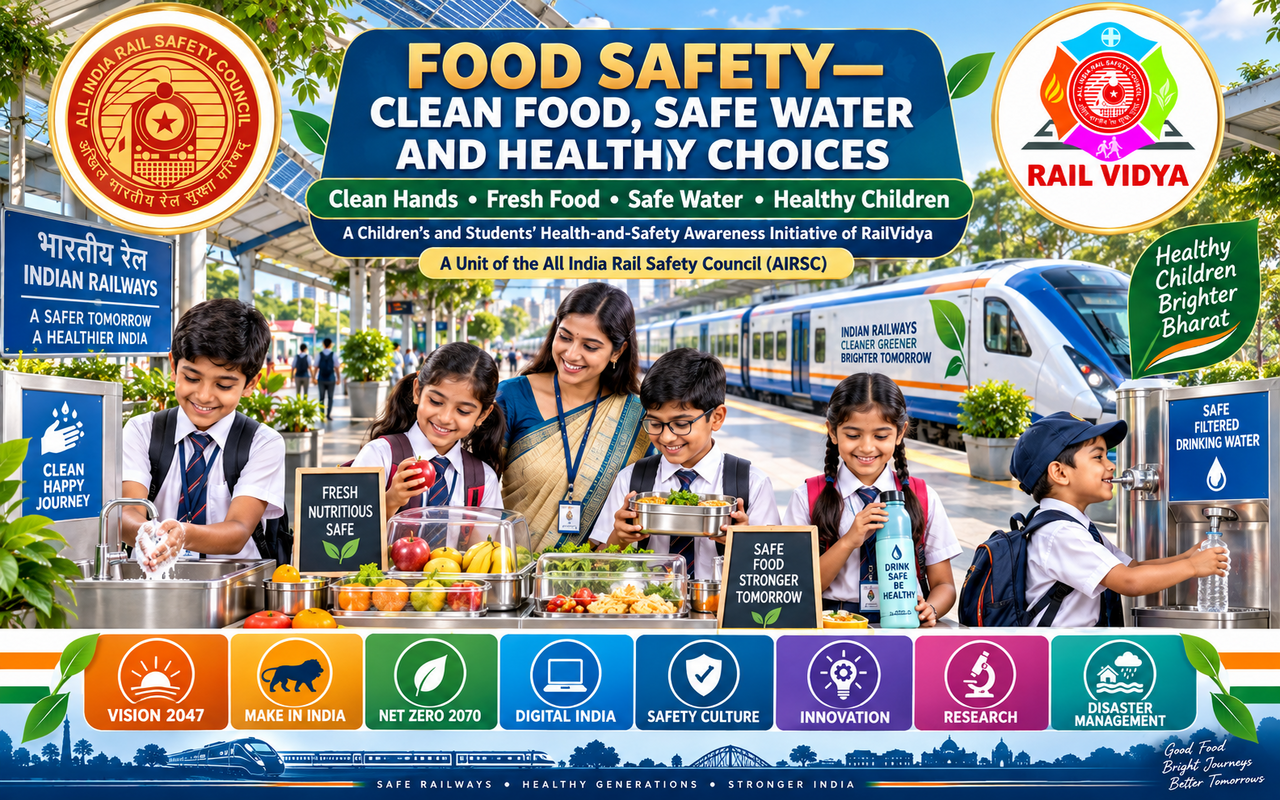
FOOD SAFETY—CLEAN FOOD, SAFE WATER AND HEALTHY CHOICES Clean Hands • Fresh Food • Safe Water • Healthy Children A Children’s and Students’ Health-and-Safety Awareness Initiative of RailVidya A Unit of the All India Rail Safety Council (AIRSC)
Food Safety—Clean Food, Safe Water and Healthy
Choices
Clean Hands • Fresh
Food • Safe Water • Healthy Children
A Children’s and Students’
Health-and-Safety Awareness Initiative of RailVidya
A Unit of the All India Rail Safety Council (AIRSC)
Nutritious and hygienically prepared food supports children’s growth, learning, immunity and overall well-being. Food that is contaminated, improperly stored, insufficiently cooked or prepared with unsafe water can cause illness. Through this awareness initiative, RailVidya encourages children and students to develop safe eating habits, recognise warning signs and make thoughtful food choices at home, at school and while travelling.
The World Health Organization summarises food safety through five essential principles: keep clean, separate raw and cooked foods, cook thoroughly, keep food at safe temperatures, and use safe water and wholesome ingredients. These principles provide a practical foundation for preventing many foodborne illnesses. WHO: Five Keys to Safer Food
Wash Hands Before Eating
Clean hands are the first defence against food contamination. Children should wash their hands thoroughly with soap and safe running water before eating, helping with food preparation or touching shared food. Hands should also be washed after using the toilet, returning from outdoors, handling waste, touching animals, coughing, sneezing or travelling on public transport.
Handwashing should include the palms, backs of the hands, fingers, spaces between the fingers, fingertips and areas around the nails. Hands should then be dried using a clean towel or another hygienic method. When soap and water are unavailable, an appropriate hand sanitiser may be used temporarily, but visibly dirty hands should be washed properly as soon as possible.
Children should avoid touching food after handling phones, money, door handles, railings or other frequently touched surfaces unless their hands have been cleaned.
Eat Clean and Freshly Prepared Food
Food should look fresh, smell normal and be served in clean conditions. Children should not eat food that appears mouldy, spoiled, unusually discoloured or contaminated by insects, dust or dirty water. A strange smell, taste or texture can be a warning sign, although some contaminated foods may appear normal.
If children are uncertain about food, they should not taste it merely to check whether it is safe. They should show it to a parent, teacher or another responsible adult. The safest rule is: when in doubt, do not eat it.
Cooked food should be eaten while fresh and stored appropriately if it is not consumed immediately. Food that has been left uncovered or exposed for an uncertain period should be examined by a responsible adult before it is served.
Choose Safe Drinking Water
Children should drink water only from a safe and trusted source. At school, railway stations, public places and during travel, water should be obtained from recognised drinking-water facilities or properly sealed packaged-water containers.
Water that looks cloudy, has an unusual smell or comes from an uncertain source should not be consumed. Children should not drink directly from taps that are not marked or confirmed as safe for drinking. Ice may also be unsafe when it has been prepared using contaminated water.
Reusable water bottles should be washed regularly and allowed to dry properly. Children should avoid sharing bottles because direct mouth contact can spread infections. A bottle should not be refilled from an unsafe or unverified source.
Examine Food Packaging Carefully
Before eating packaged food, students should check whether the wrapper, bottle, can or container is properly sealed. Torn packets, leaking containers, broken seals and swollen, rusted or deeply dented cans may indicate damage or contamination.
Children should learn to look for important label information, including the product name, ingredients, allergen declarations, manufacturing or packing details, date markings, storage instructions and other required information. They should ask an adult for help if a label is unclear. India’s food-labelling framework is maintained by the Food Safety and Standards Authority of India. FSSAI: Labelling and Display Regulations
Food should not be consumed after its stated expiry or use-by date. A damaged package should be rejected even when the date appears valid. Children must never eat food from an unlabelled or suspicious container.
Understand Date Labels
Date information helps families determine food quality and safety. Children should not alter, remove or ignore date labels. They should ask an adult to explain the difference between the label terms used on a particular product.
A product may become unsafe before its stated date if it has been opened, damaged or stored incorrectly. Similarly, some items must be refrigerated after opening. The storage instructions on the package should therefore be followed carefully.
Students should not purchase products when date details are missing, illegible or appear to have been changed.
Keep Raw and Cooked Food Separate
Raw meat, poultry, seafood and eggs can contain harmful microorganisms. Their juices should not touch cooked food, fruit, vegetables, lunch-box items or foods that are ready to eat.
Separate utensils, chopping boards and containers should be used wherever possible. Hands and preparation surfaces must be cleaned after handling raw ingredients. The WHO specifically recommends separating raw and cooked foods to prevent cross-contamination. WHO: Five Keys to Safer Food
Children should not handle raw animal products or use sharp kitchen equipment without suitable adult supervision. Food preparation tasks must be appropriate for the child’s age and ability.
Cook Food Thoroughly
Food should be cooked thoroughly, especially meat, poultry, eggs and seafood. Insufficient cooking may allow dangerous microorganisms to survive. Soups, curries and reheated foods should be heated properly throughout rather than warmed only on the surface.
Young children should not decide by themselves whether meat or other high-risk food is sufficiently cooked. A responsible adult should supervise preparation and follow recognised cooking guidance. Raw or partly cooked animal products may present additional risks, particularly for young children and people with certain health conditions.
Cooked food should not be placed on a plate or surface that previously held raw meat unless it has been washed properly.
Store Food Safely
Perishable foods should not remain at room temperature for unnecessarily long periods. The WHO advises refrigerating cooked and perishable food promptly and not leaving cooked food at room temperature for more than two hours. WHO: Five Keys to Safer Food
Refrigerators should be kept clean and should not be overloaded in a way that prevents proper cooling. Food should be placed in clean, covered containers and separated from raw ingredients. Leftovers should be refrigerated promptly, reheated thoroughly and consumed within an appropriate period.
Children should not eat refrigerated leftovers without checking with an adult. A power interruption or refrigerator malfunction may make stored food unsafe even if it appears normal.
Lunch-Box Safety
A student’s lunch box should be clean, dry and suitable for food storage. Food should be prepared with clean hands and packed in properly closed containers. Raw and cooked foods should be separated, while foods requiring refrigeration should be kept cool using an appropriate insulated arrangement.
Lunch boxes should not remain in direct sunlight, inside a hot vehicle or near other sources of heat. Children should eat lunch at the designated time and should not keep highly perishable leftovers for consumption much later.
After use, lunch boxes, bottles and utensils should be emptied, washed and dried thoroughly. Forgotten food can spoil, create unpleasant odours and attract insects.
Safe Food at School
Students should eat only in designated clean areas and use clean utensils. Food that has fallen on the floor, touched an unclean surface or been exposed to insects should not be eaten.
School canteens and meal areas should maintain cleanliness, safe water, appropriate waste disposal and suitable food storage. Students can support food safety by placing waste in designated bins, reporting unhygienic conditions and avoiding behaviour that contaminates shared food.
Children should not exchange meals when allergies, medical diets or religious and dietary restrictions may be involved. Teachers should be informed about students who require special food precautions.
Food Safety During Railway and Metro Travel
Children should carry food in clean, securely closed containers and drink water from trusted sources. They should wash or sanitise their hands before eating, particularly after touching seats, railings, ticket machines and other shared surfaces.
Food should be purchased from authorised and hygienically maintained outlets. Children should avoid unpackaged items exposed to dust, flies, dirty water or repeated handling. Hot food should be served properly hot, and chilled food should remain appropriately cold.
Eating or drinking should never distract children while boarding, alighting, using escalators or moving through crowded platforms. Food wrappers, cups and bottles must be placed in designated bins and should never be thrown from a train window.
Street-Food Awareness
Street food can be enjoyable, but children should choose vendors and outlets that maintain visible hygiene. The preparation area, utensils, ingredients and serving practices should appear clean. Food should be protected from dust, insects, traffic pollution and unsafe water.
Freshly cooked food served hot is generally preferable to food that has been standing uncovered for a long time. Sauces, cut fruit, ice and water from uncertain sources require particular caution. A parent, guardian or teacher should guide younger children when selecting food outside the home.
Children should avoid food outlets where handlers use visibly unclean utensils, touch food and money without suitable hygiene, or allow raw ingredients to come into contact with cooked items.
Fruit and Vegetable Safety
Fruits and vegetables should be washed thoroughly using safe water, especially when they will be eaten raw. Rotten, damaged or mouldy portions should be handled carefully, and seriously spoiled produce should be discarded rather than merely trimmed for consumption.
Children should not wash produce with soap, detergent or household chemicals. Safe water and food-appropriate cleaning practices should be used under adult guidance. Cut fruit should be covered and refrigerated when necessary.
Pre-cut fruit sold in uncovered conditions may have been exposed to dust, insects, contaminated surfaces or unsafe water. Students should select freshly prepared and hygienically protected items.
Milk and Dairy Safety
Milk and dairy products should come from reliable sources and be stored according to label instructions. Pasteurised or appropriately treated milk is a safer choice than milk of uncertain origin. Products requiring refrigeration should not be consumed after being left in hot conditions for an extended time.
Sour smell, unusual texture, swelling or leakage from a package may indicate spoilage. Children should not taste a questionable product. It should be shown to a responsible adult and discarded safely if necessary.
Food-Allergy Awareness
Some children may experience serious reactions to foods such as milk, eggs, peanuts, tree nuts, wheat, soy, fish or shellfish. Students with diagnosed allergies should follow the plan provided by their family and healthcare professional. They should read labels with adult support and avoid sharing food.
Friends and classmates must never pressure a child to eat something they have been told to avoid. Food allergies should not be treated as a joke. Even a small amount of an allergen can be dangerous for some individuals.
Warning signs may include swelling, breathing difficulty, widespread rash, repeated vomiting, severe dizziness or collapse. Such symptoms require immediate adult attention and urgent professional medical assistance. Prescribed emergency medicine should be used only according to the child’s individual medical plan and relevant training.
Avoid Excessive Junk Food and Sugary Drinks
Food safety includes making healthy as well as hygienic choices. Children should enjoy a balanced diet containing appropriate fruits, vegetables, grains, proteins and other foods recommended for their needs. Highly processed foods, excessive salt, added sugar and sugary drinks should not routinely replace nutritious meals.
Product advertising and attractive packaging do not necessarily indicate nutritional quality. Children should learn to read labels with help from adults and make informed choices rather than selecting food only because it is fashionable or heavily promoted.
Healthy eating should be encouraged positively without shaming a child’s body, culture or family food traditions.
Do Not Share Utensils Carelessly
Sharing bottles, cups, spoons, straws and partially eaten food can spread infections through saliva or contaminated hands. Children should use their own clean utensils and drinking containers whenever possible.
During celebrations or group activities, food should be distributed using clean serving equipment rather than handled repeatedly by several people. Anyone who is unwell should follow appropriate health guidance and avoid preparing food for others when there is a risk of spreading infection.
Recognising Possible Foodborne Illness
Foodborne illness can cause symptoms such as nausea, vomiting, diarrhoea, stomach pain or fever. A child who feels unwell after eating should inform a parent, teacher or responsible adult immediately.
Children should not take medicine on their own or consume unverified home remedies. Professional medical guidance may be necessary, particularly when symptoms are severe, persistent or accompanied by dehydration, breathing difficulty, blood, unusual sleepiness or loss of consciousness.
A child who is vomiting or has diarrhoea should be given appropriate care and safe fluids according to adult or medical guidance. Possible contaminated food and its packaging may need to be retained safely for examination by responsible authorities, but children should not handle it unnecessarily.
Food Safety During Emergencies and Disasters
Floods, storms, power failures and other emergencies can contaminate food and water or interrupt refrigeration. Children should consume only food and water confirmed as safe by responsible adults or authorised agencies.
Food that has come into contact with floodwater, chemicals or pests should not be eaten. Damaged cans, broken containers and refrigerated foods affected by prolonged power loss require careful adult assessment.
Children must not enter flooded kitchens, touch wet electrical appliances or attempt to recover food from an unsafe area.
Preventing Choking
Children should sit calmly while eating and chew food properly. Running, laughing forcefully, playing or talking with food in the mouth can increase the risk of choking. Small, hard or round foods may require age-appropriate preparation and supervision.
Non-food objects, bottle caps and small packaging components should never be placed in the mouth. If someone appears to be choking and cannot breathe or speak, children should call a trained adult and emergency assistance immediately. First-aid techniques should be learned through qualified practical training.
Reduce Food Waste Responsibly
Students should take only the quantity they can reasonably eat. Preventing waste respects the effort, water, energy and resources used to produce food. However, avoiding waste must never mean eating food that may be spoiled or unsafe.
Suitable uncontaminated surplus food may be handled through responsible adult-led arrangements. Expired, contaminated or improperly stored food should not be donated or served.
The Role of Parents, Teachers and Schools
Parents and teachers play an important role in developing lifelong food-safety habits. Adults should demonstrate handwashing, hygienic preparation, safe storage and responsible purchasing. Children should be encouraged to ask questions and report concerns without fear of punishment.
Schools can strengthen awareness through hygiene lessons, handwashing facilities, safe drinking-water systems, clean meal areas and age-appropriate food-safety activities. Canteens and meal providers should follow applicable hygiene and food-safety requirements.
Families should provide individual guidance for children with allergies, diabetes, digestive conditions or other dietary needs. Medical and dietary decisions should be made with appropriately qualified professionals.
Safe food and clean water are essential for every child’s health, learning and dignity. Food safety is not limited to the kitchen; it continues through purchasing, preparation, storage, serving, eating and waste disposal.
RailVidya encourages every child and student to become a Young Food-Safety Ambassador by practising clean habits, recognising unsafe food, avoiding waste and sharing responsible health messages with family and friends. Small daily actions can prevent illness and protect entire communities.
RailVidya Safety Messages
“Clean Hands • Clean Food • Safe Water • Healthy Life.”
“Check the Pack • Check the Date • Choose Food That Is Safe.”
“When in Doubt, Do Not Eat—Ask a Responsible Adult.”
“Eat Fresh • Drink Safe • Stay Healthy • Learn Better.”