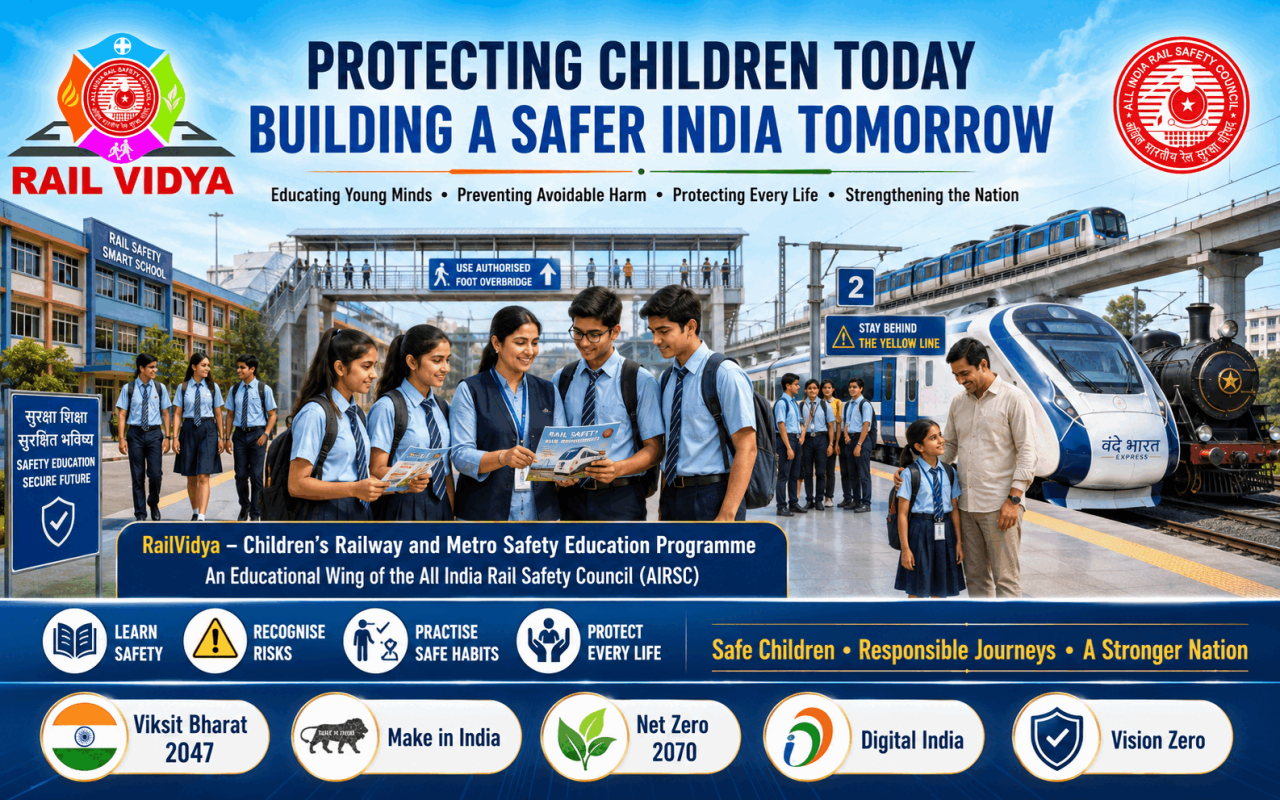
Responsible Behaviour in Public Transport, promoted through RailVidya Children’s Safety Education of the All India Rail Safety Council (AIRSC), teaches children to travel safely, patiently and respectfully on railways, metros, buses and other shared transport systems. By following instructions, queuing responsibly, respecting fellow passengers, protecting public property, using digital devices carefully and reporting hazards to authorised personnel, young passengers can contribute to safer, cleaner, more inclusive and disciplined public transport across India.
Responsible Behaviour in Public Transport
Responsible behaviour in public transport is an essential part of personal safety, civic discipline and respect for the wider community. Railways, metros, buses and other shared mobility systems serve people of different ages, backgrounds and abilities. Every passenger’s conduct can influence the safety, comfort and dignity of others. Through RailVidya Children’s Safety Education, the educational wing of the All India Rail Safety Council (AIRSC), children are encouraged to become alert, considerate and responsible users of public transport.
Public transport is a shared national resource. It must be used with patience, discipline and care. Children should understand that stations, platforms, vehicles, waiting areas and passenger facilities are not private spaces or playgrounds. Their behaviour should support an orderly environment in which passengers can travel safely and essential services can operate without obstruction.
A responsible journey begins with preparation. Children should travel under appropriate adult supervision, understand the planned route and remain with their parent, teacher, guardian or authorised group leader. Arriving with sufficient time reduces rushing and helps passengers follow safe procedures. Tickets, identification where required and essential travel information should be organised before approaching the boarding area.
Orderly queuing is a fundamental public-transport habit. Children should wait patiently, allow passengers to alight before boarding and avoid pushing, shouting or forcing their way through doors. Doorways, aisles, staircases, escalators and emergency routes should remain clear. Calm and organised movement reduces the risk of falls, crowding and separation from accompanying adults.
Children should board and alight only when the train, metro or bus has stopped completely and safe access is available. They must watch the gap, use handrails where provided and follow the instructions of responsible adults and authorised personnel. Chasing a departing vehicle, blocking closing doors or attempting to board at the last moment can create serious danger and must always be avoided.
Inside a public-transport vehicle, children should sit safely or use designated handholds if standing is permitted. They should not run through coaches, climb on seats, lean against doors or interfere with windows, controls, alarms and emergency equipment. Bags, toys and other belongings should be kept secure and away from aisles so they do not create obstructions or tripping hazards.
Respect for fellow passengers is central to responsible travel. Children should speak at a considerate volume, avoid disruptive games and refrain from playing music or videos without headphones. Even when using headphones, the volume should remain low enough to hear important announcements and safety warnings. Personal conversations and digital activities should never disturb others or reduce awareness.
Priority facilities should always be respected. Seats, lifts, ramps and designated spaces intended for senior citizens, pregnant women, persons with disabilities and passengers carrying infants must not be misused. Children should learn to offer a seat when appropriate and provide assistance only in a safe manner under adult guidance. Courtesy and inclusion are important expressions of responsible citizenship.
Cleanliness contributes directly to passenger safety and public health. Waste should be placed only in designated bins, and food or liquids should not be left where they could create slippery surfaces or attract pests. Children must not spit, litter, mark walls or damage seats and fixtures. Toilets, drinking-water facilities and waiting areas should be used hygienically and responsibly.
Public property belongs to the nation and must be protected. Damaging seats, signs, windows, doors, displays, safety equipment or station facilities can create hazards, inconvenience passengers and disrupt essential services. Children should never scratch, write on, break or misuse transport property. Reporting damage to a responsible adult or authorised employee is a constructive act of public service.
Safety signs, announcements, barriers and instructions must always be followed. Children should remain behind designated platform lines, use authorised crossings and stay away from restricted operational areas. They must not copy passengers who ignore the rules. Responsible behaviour means choosing the safe and lawful action even when others behave carelessly.
Mobile phones and digital devices should be used thoughtfully. Children should put devices away while walking through stations, boarding, alighting, using stairs or crossing authorised transport pathways. Photography and video recording should never take place near platform edges, moving vehicles, restricted areas or in a manner that invades another passenger’s privacy. Real-time travel details and personal information should not be shared publicly without appropriate adult guidance.
Personal security is another important element of responsible travel. Children should stay with their accompanying adult, keep belongings secure and avoid accepting food, drinks, gifts or assistance from unknown persons. If they become separated, feel unsafe or experience inappropriate behaviour, they should immediately approach uniformed staff, security personnel, police officers or an authorised help desk.
Children should never touch, open or move an unattended or suspicious object. They should step away and report it to a responsible adult or authorised official. Smoke, fire, damaged equipment, overcrowding, harassment or unsafe passenger conduct should also be reported promptly. Responsible reporting helps trained personnel respond before a situation becomes more serious.
Emergency equipment must be respected. Alarms, emergency communication systems, extinguishers, escape devices and emergency exits are provided to protect lives. They must never be used as toys or activated without genuine cause. During an emergency, children should remain calm, stay with their accompanying adult and follow official instructions rather than running, shouting or spreading unverified information.
Responsible behaviour includes kindness and social awareness. Passengers may have different languages, cultures, physical abilities and travel needs. Children should be encouraged to communicate politely, respect personal space and avoid teasing, discrimination or bullying. A safe public-transport environment is one in which every passenger is treated with dignity.
Parents, teachers and guardians are the strongest role models for children. Adults who queue patiently, protect public property, follow safety rules and treat others respectfully demonstrate that responsible behaviour is a normal part of travel. Inconsistent adult conduct can weaken safety education; therefore, adults must practise the standards they expect young passengers to follow.
Schools can strengthen these values through life-skills education, role-play, travel-safety lessons, student campaigns and supervised journeys. Children should be encouraged to understand that public transport is a shared social environment in which personal choices have wider consequences. Education can transform ordinary travel into a meaningful lesson in safety, discipline, inclusion and civic responsibility.
As India advances towards integrated mobility, modern railways, expanding metro systems, smart stations and digital passenger services under Viksit Bharat 2047, responsible passenger behaviour will become increasingly important. World-class public transport depends not only on advanced infrastructure and technology but also on citizens who use it safely, respectfully and sustainably.
Through RailVidya, the All India Rail Safety Council seeks to build a future generation that regards responsible public-transport behaviour as a national value. Every child who travels with awareness, patience and consideration contributes to safer journeys, stronger communities and a more disciplined and inclusive India.
Travel Safely • Respect Others • Protect Public Property • Strengthen the Nation
© 2026 Dr.R.Padmanabhan. All Rights Reserved.
Founder Chairman — All India Rail Safety Council (AIRSC)
Promoting Railway Safety, Education and Public Awareness
Email: admin@railsafety.co.in | Website: www.railsafety.co.in / www.railsafety.in
Responsible Behaviour in Public Transport, promoted through RailVidya Children’s Safety Education of the All India Rail Safety Council (AIRSC), teaches children to travel safely, patiently and respectfully on railways, metros, buses and other shared transport systems. By following instructions, queuing responsibly, respecting fellow passengers, protecting public property, using digital devices carefully and reporting hazards to authorised personnel, young passengers can contribute to safer, cleaner, more inclusive and disciplined public transport across India.