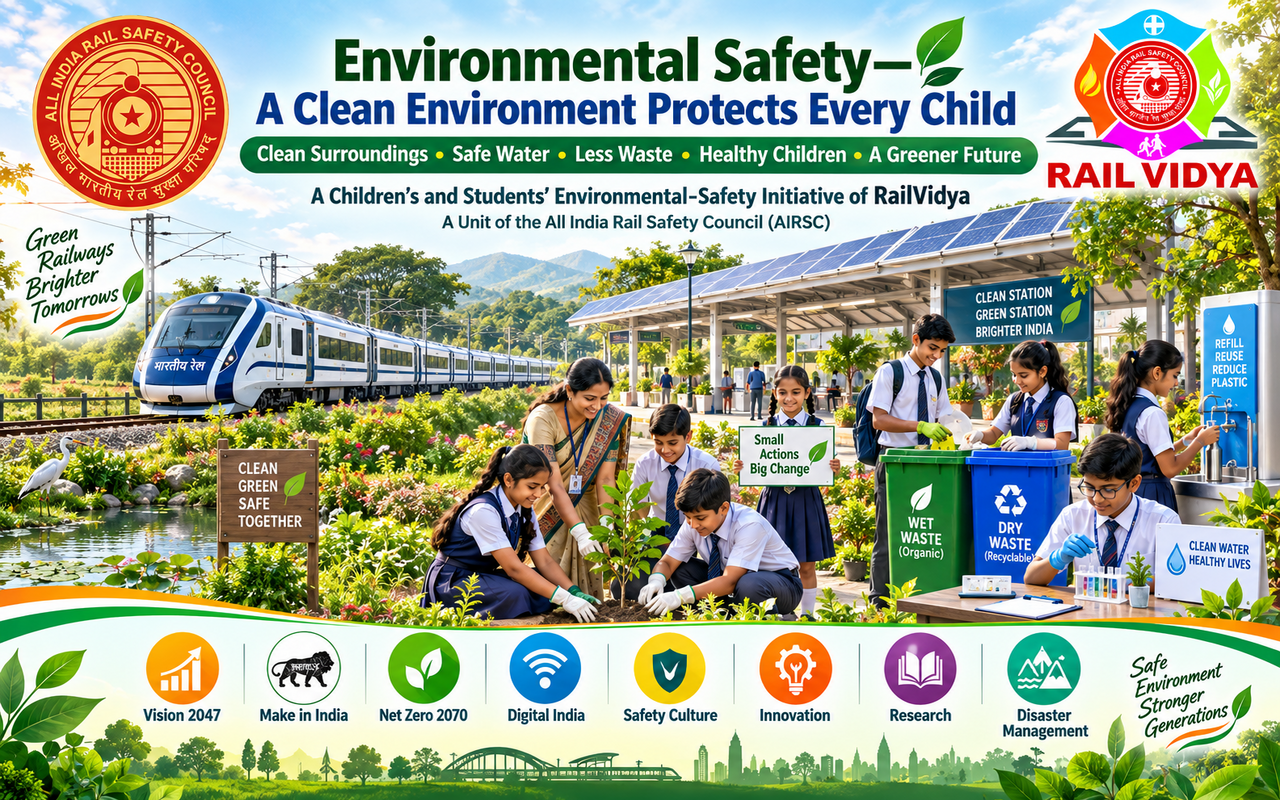
ENVIRONMENTAL SAFETY—A CLEAN ENVIRONMENT PROTECTS EVERY CHILD Clean Surroundings • Safe Water • Less Waste • Healthy Children • A Greener Future A Children’s and Students’ Environmental-Safety Initiative of RailVidya A Unit of the All India Rail Safety Council (AIRSC)
Environmental Safety—A Clean Environment Protects Every Child
Clean Surroundings • Safe Water •
Less Waste • Healthy Children • A Greener Future
A Children’s and Students’ Environmental-Safety Initiative of RailVidya
A Unit of the All India Rail Safety Council (AIRSC)
A clean and healthy environment is essential for every child’s safety, development, education and overall well-being. The quality of the air children breathe, the water they drink, the food they eat and the surroundings in which they live, learn, play and travel can directly influence their health. Through this awareness initiative, RailVidya encourages children and students to understand environmental risks, adopt responsible habits and participate positively in protecting their schools, homes, transport systems and communities.
Children can be particularly vulnerable to air pollution, unsafe water, inadequate sanitation, hazardous chemicals, unmanaged waste, climate-related risks and electronic waste because their bodies are still developing. Creating safer environments therefore requires the combined participation of families, schools, communities, public authorities and young people themselves. WHO: Children’s Environmental Health
Understanding Environmental Safety
Environmental safety means maintaining surroundings that reduce exposure to pollution, disease, injury and hazardous substances. It includes clean air, safe drinking water, hygienic sanitation, responsible waste management, protected natural resources and safe public spaces.
Environmental protection is not limited to forests, rivers and wildlife. It begins with everyday actions such as using a waste bin, conserving water, avoiding single-use materials, reporting unsafe dumping and keeping public places clean. Every responsible action supports both human health and the natural environment.
Children should understand that they are not expected to handle hazardous waste, enter polluted areas or clean dangerous materials themselves. Their role is to practise safe habits, inform responsible adults and participate only in properly supervised environmental activities.
Keep Homes, Schools and Public Places Clean
Clean surroundings help discourage insects, rodents and other pests that may spread illness. Food waste, uncovered bins, stagnant water and blocked drains can create unhealthy conditions. Children should place waste in designated containers and encourage others to do the same.
Classrooms, corridors, playgrounds, toilets and eating areas should remain clean and free from avoidable hazards. Spilled liquids, broken glass, exposed nails and other dangerous objects should be reported immediately. Children should not pick up sharp, contaminated or unfamiliar items with bare hands.
Cleanliness is a shared responsibility, but children should never be asked to handle biomedical waste, chemicals, dead animals or other potentially dangerous material without trained adult supervision and suitable protective measures.
Segregate Waste Responsibly
Waste segregation means separating different types of discarded material so that each can be handled appropriately. Homes and schools should follow the categories and collection arrangements prescribed by their local authority. These commonly distinguish biodegradable or wet waste, dry recyclable materials and domestic hazardous waste.
Food scraps, fruit peels and similar biodegradable materials should not be mixed unnecessarily with clean recyclable items. Paper, cardboard, suitable plastics, metals and glass may be collected separately when local recycling systems accept them. Batteries, bulbs, chemicals, medicines and electronic items require special handling.
Children should learn the correct bin colours and categories used in their locality or school rather than relying on one universal colour system. Labels should be read carefully, and uncertain items should be shown to a responsible adult.
Reduce Waste Before It Is Created
The most effective way to manage waste is to avoid creating unnecessary waste. Children can carry reusable water bottles, lunch containers, cloth bags and durable stationery. They can refuse unnecessary disposable items and select products with minimal packaging when adults approve the purchase.
Students should use notebooks and paper thoughtfully, print only when required and use both sides where appropriate. Books, uniforms, toys and school supplies in usable condition may be repaired, exchanged or donated through responsible arrangements.
Reducing waste does not mean reusing items that are unhygienic, contaminated or unsafe. Food packaging, medical products and damaged containers should be handled according to safety instructions.
Never Litter
Littering makes neighbourhoods and public spaces unpleasant and unsafe. Plastic, glass, metal, food wrappers and other waste can block drains, injure people and animals, contaminate water and contribute to flooding.
Children should keep small items of waste with them until a proper bin is available. Waste must never be thrown from a train, metro, bus or other vehicle. It should not be left under seats, on platforms, in parks or beside roads.
A person who keeps public spaces clean demonstrates civic discipline and respect for the community. A clean environment begins when each individual takes responsibility for their own waste.
Railway and Metro Environmental Responsibility
Railway stations, metro systems and trains are shared public environments. Children should place bottles, cups, food wrappers and tissues only in designated bins. Spitting, writing on walls, damaging seats and leaving waste inside coaches are irresponsible practices.
Waste must never be thrown onto railway tracks. Apart from causing pollution, trackside waste can create fire risks, obstruct drainage, attract animals and make maintenance work more difficult. Children should never enter a track area to retrieve an object or clean litter; authorised railway personnel must manage such situations.
Students should use station drinking-water and sanitation facilities responsibly. Taps should be closed after use, and toilets should be left in a condition suitable for the next passenger. Any leak, overflowing bin or unhygienic condition should be reported to station staff.
Prevent Plastic Pollution
Plastic products can remain in the environment for a very long time. When discarded carelessly, they may enter drains, rivers, lakes and oceans, where they can harm wildlife and break down into smaller particles.
Children can reduce plastic waste by carrying reusable bottles and containers, avoiding unnecessary plastic bags and choosing durable items. Reusable products should be kept clean and maintained properly.
Students should never burn plastic. Burning plastic and mixed waste can release harmful smoke and pollutants. Waste burning should be reported to a responsible adult or local authority rather than confronted personally.
Protect Clean Air
Clean air is necessary for healthy lungs, learning and physical activity. Vehicle exhaust, tobacco smoke, construction dust, industrial emissions and waste burning can reduce air quality.
Children should stay away from visible smoke, burning waste and heavily polluted areas wherever possible. They should never light waste or encourage others to do so. If smoke enters a classroom or home, a responsible adult should assess the situation and take appropriate action.
Schools can support cleaner air by preventing waste burning, maintaining ventilation, reducing unnecessary vehicle idling and protecting green spaces. Students may participate in supervised awareness campaigns but should not enter hazardous areas to measure or investigate pollution.
Avoid Tobacco Smoke and Vaping Aerosols
Children should not smoke, vape or remain unnecessarily close to people using tobacco or electronic smoking products. Smoke and aerosols can contain substances that are harmful to health.
Smoking should never occur inside schools, public transport or other prohibited areas. A child who is regularly exposed to smoke at home or elsewhere should speak to a trusted adult, teacher or healthcare professional.
Used cigarettes, vaping devices and refill containers should not be touched because they may contain toxic residue, sharp components or batteries requiring specialised disposal.
Safe Water and Water Conservation
Children should drink water only from a safe and recognised source. Water that appears cloudy, smells unusual or comes from an uncertain source should be avoided. Problems with school drinking-water facilities should be reported promptly.
Water conservation is also an environmental responsibility. Taps should be turned off completely, leaks should be reported and water should not be wasted during washing or play. Conserving water protects a limited resource and reduces pressure on community supplies.
Saving water must never involve using contaminated water for drinking, cooking or personal hygiene. Health and safety should remain the first consideration.
Protect Rivers, Lakes and Drainage Systems
Waste, oil, chemicals, paint and medicines should not be poured into drains or water bodies. Such materials may harm aquatic life, contaminate water and create risks for communities.
Children should never play in drains, flood channels, polluted ponds or waterlogged areas. Floodwater may conceal deep openings, sharp objects, sewage, chemicals and electrical hazards.
Environmental clean-up activities near rivers, drains or railway property should take place only with permission, risk assessment and responsible adult supervision.
Prevent Stagnant Water
Stagnant water collected in containers, tyres, coolers, flowerpots and discarded materials can support mosquito breeding. Children can help by informing adults about standing water around homes and schools.
Water-storage containers should be appropriately covered and maintained. Drains should not be blocked with plastic or other waste. Students should not attempt to clean contaminated drains without suitable adult assistance and protective equipment.
Food and Environmental Cleanliness
Food safety is closely connected to environmental cleanliness. Food should be protected from dust, insects, dirty water and waste. Eating areas should be clean, and hands should be washed before meals.
Food wrappers and leftovers should be disposed of properly. Waste should not be allowed to accumulate around school canteens, railway stations or playgrounds because it can attract pests and create unpleasant and unhygienic conditions.
Children should avoid food sold in visibly polluted or unhygienic surroundings and seek guidance from a parent, teacher or guardian when uncertain.
Safe Sanitation and Hygiene
Clean toilets, handwashing facilities and responsible sanitation practices protect health and dignity. Children should use toilets properly, flush where appropriate and wash their hands with soap and safe water afterward.
Toilets and washing areas should not be used for playing. Wet floors, broken fixtures, blocked drains and missing water supplies should be reported. Students should respect the privacy and accessibility needs of other users.
Open defecation and unsafe disposal of sanitary materials can contaminate soil and water. Schools should provide age-appropriate sanitation education and safe disposal arrangements.
Electronic-Waste Safety
Electronic waste includes discarded mobile phones, computers, chargers, earphones, batteries, cables, televisions and other electrical devices. These items may contain substances that can harm people or the environment when broken, burned or disposed of incorrectly.
Children should never dismantle electronic equipment, break screens, puncture batteries or burn wires to recover metal. Damaged batteries may leak, overheat or catch fire. Electronic waste should be given to authorised collection or recycling systems through responsible adults.
Young people are particularly vulnerable to hazardous exposure from unsafe e-waste handling. WHO: Children and Electronic Waste
Battery and Chemical Safety
Batteries, paints, pesticides, cleaning liquids, fuels and laboratory chemicals must never be treated as ordinary play materials. Children should not touch, smell, taste or mix unknown substances.
Leaking or swollen batteries should be kept away from heat and handled only by a responsible adult following appropriate safety guidance. Button batteries require particular care because swallowing one is a medical emergency.
Chemicals should remain in their original labelled containers and must never be transferred into drinking-water or food containers. An unlabelled liquid should always be treated as potentially unsafe.
Do Not Burn Waste
Burning leaves, plastic, rubber, electronic components or mixed household waste can release smoke and harmful pollutants. Fire may also spread to buildings, vegetation, vehicles or electrical installations.
Children should never start a waste fire or add objects to one. If they notice uncontrolled burning, they should move away, inform a responsible adult and contact the appropriate authority when necessary.
During smoke events, children with asthma or other respiratory conditions may require individual medical guidance and additional protection.
Noise Pollution and Hearing Protection
Environmental safety also includes controlling unnecessary noise. Excessive sound from horns, loudspeakers, machinery, fireworks and personal audio devices can disturb sleep, concentration and well-being and may damage hearing.
Children should avoid standing close to powerful speakers and should use suitable hearing protection at unavoidable loud events. Horns, alarms and public-address equipment must never be misused for amusement.
Students can support a quieter environment by keeping device volume reasonable and respecting quiet zones around schools, hospitals and residential areas.
Protect Green Spaces
Trees and green areas provide shade, support wildlife and contribute to healthier communities. Children should avoid damaging plants, breaking branches or disturbing animal habitats.
Tree-planting activities should use suitable species and follow expert or local guidance. Planting is only the beginning; young trees require appropriate watering, protection and long-term care.
Students must not climb unsafe trees, enter dense vegetation alone or handle unknown plants, insects or animals. Environmental appreciation should always be combined with personal safety.
Respect Animals and Wildlife
Children should observe wildlife from a safe distance and avoid feeding, chasing, trapping or provoking animals. Wild animals and unfamiliar street animals may behave unpredictably.
Plastic, fishing line and other discarded materials can injure animals. Responsible waste disposal therefore protects both human communities and wildlife.
An injured or trapped animal should be reported to a responsible adult or authorised animal-welfare service. Children should not attempt a rescue that could expose them to bites, scratches, disease or traffic.
Climate and Weather Safety
Environmental changes can contribute to extreme heat, heavy rain, flooding, storms and other hazards. Children should follow official weather and emergency instructions and avoid relying on rumours or unverified social-media messages.
During hot weather, students should drink safe water, rest in shaded or cool areas and avoid excessive exertion when conditions are dangerous. During storms and flooding, they should stay away from trees, electrical equipment, fast-moving water and damaged structures.
Schools should develop emergency plans that address local environmental and climate risks. Children should be taught preparedness without being made unnecessarily fearful.
Responsible Energy Use
Saving electricity can reduce unnecessary resource consumption. Children should switch off lights, fans and electronic devices when they are no longer needed, provided it is safe and they have permission to operate the equipment.
Energy conservation must not compromise health, study needs, ventilation or safety. Electrical faults, damaged switches and exposed wires should be reported rather than touched.
Children can also support low-impact travel by walking, cycling or using shared transport where routes, age, traffic conditions and adult guidance make those choices safe.
Safe Participation in Clean-Up Campaigns
Environmental campaigns can develop teamwork and civic responsibility, but they require proper organisation. Before taking part, children should receive clear instructions, adult supervision and suitable protective equipment.
Students should not handle sharp metal, broken glass, needles, chemicals, medical waste, dead animals or unidentified containers. These materials should be marked from a safe distance and reported to trained personnel.
Clean-up participants should wash their hands thoroughly afterward and avoid touching their faces while handling ordinary waste. Activity locations near roads, railway tracks, water bodies or construction sites require formal permission and additional safeguards.
Green School Responsibility
A green and safe school promotes waste segregation, clean sanitation, safe drinking water, energy conservation, pollution awareness and responsible use of materials. Environmental practices should become part of everyday school culture rather than occasional events.
RailVidya Safety Clubs can organise supervised awareness assemblies, poster activities, waste audits, water-conservation campaigns and cleanliness programmes. Students can observe and report environmental problems, while trained adults manage technical or hazardous work.
Schools should ensure that environmental action remains inclusive so that every child can participate according to their age, ability and support needs.
The Role of Parents, Teachers and Communities
Adults should model the environmental behaviour expected from children. Throwing waste from vehicles, burning rubbish or wasting water can weaken the lessons taught at school.
Parents and teachers should explain why each environmental practice matters and encourage children to ask questions. Community authorities should provide reliable waste collection, clean water, sanitation, safe public spaces and accessible reporting arrangements.
UNICEF emphasises that every child has a right to a healthy environment and that children and young people can be empowered as agents of constructive change. UNICEF: Healthy Environments for Healthy Children
A Message from RailVidya
Environmental safety is an essential part of protecting every child. Clean surroundings reduce health risks, responsible waste management prevents pollution and the careful use of water and energy protects resources for future generations.
RailVidya encourages children and students to become Young Environmental Safety Ambassadors. Every child can make a meaningful difference by refusing to litter, separating waste, conserving water, protecting public property and encouraging family and friends to adopt cleaner habits.
Children should participate safely, positively and under appropriate adult guidance. Protecting the environment is not only about caring for nature—it is about protecting human life, public health and the future of every community.
RailVidya Safety Messages
“A Clean Environment Protects Every Child.”
“Use the Right Bin • Reduce Waste • Prevent Pollution • Protect Life.”
“Clean School • Clean Station • Clean Community • Healthy Nation.”
“Save Water • Save Energy • Protect Nature • Secure the Future.”
“One Child • One Family • One Environmental Safety Message.”
“Young Minds for a Clean, Green and Safety-Conscious India.”